Removalist Humanoids: Two-Robot Coordinated Couch Carries Through Tight Stairwells
Dual-agent teleoperation and compliant kinematics allow two robots to carry heavy three-seater lounges up flights of stairs without scratching walls.
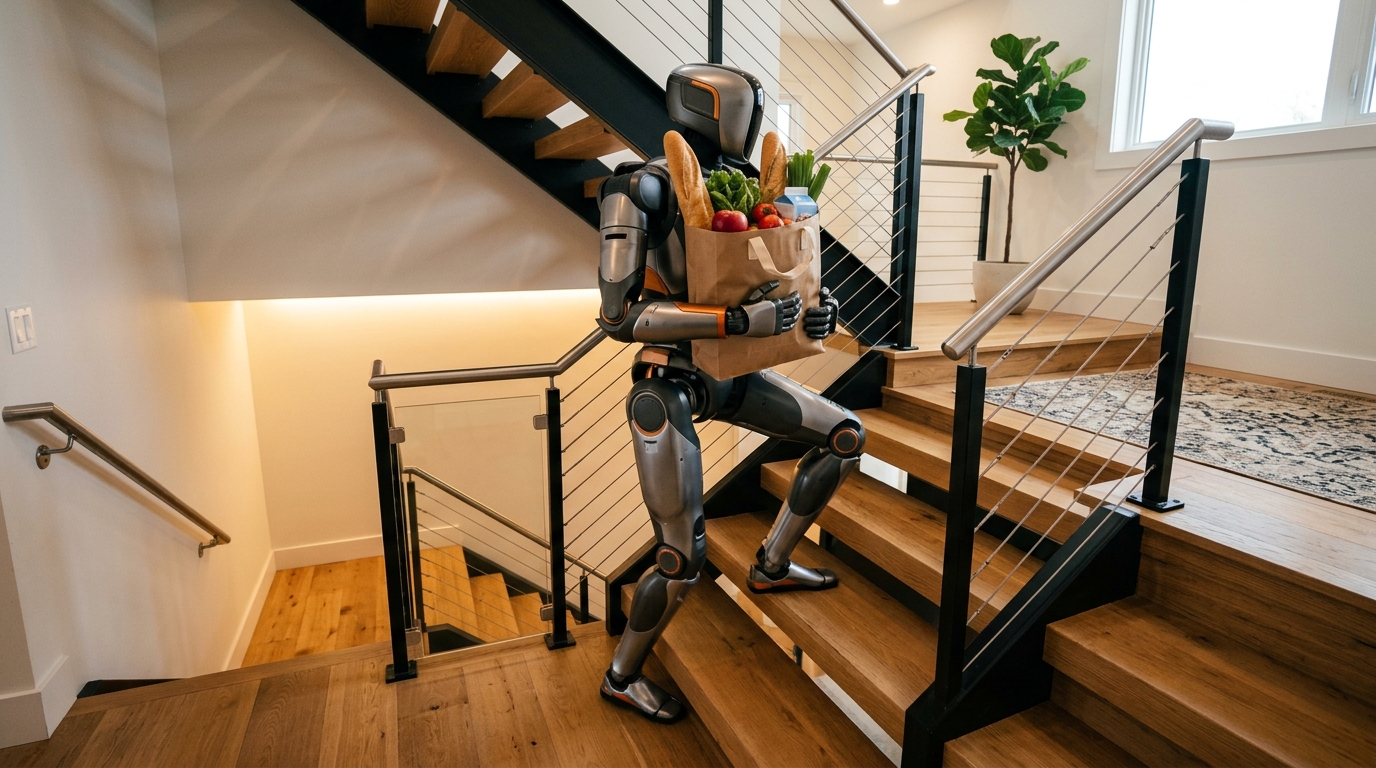
- Low-latency inter-robot links synchronize dual-biped lifting paths to the millimeter on stairs.
- Automatic pitch compensation keeps heavy lounges and oak tables level on steep inclines.
- Soft polymer chassis bumpers protect plaster walls and skirting boards on 90-degree landings.
Moving house remains one of life's most stressful physical tasks, especially when navigating heavy solid oak dining tables and cumbersome modular couches through narrow Victorian terraced hallways and tight spiral stairwells. Independent removal companies are pioneering the use of paired humanoid teams to handle heavy furniture maneuvers.
By running low-latency ad-hoc wireless links between chassis controllers, two robots coordinate their lifting trajectories with millimeter synchronization. As the lead robot climbs stairs backwards, the trailing robot lifts its end to maintain a horizontal cargo plane, preventing the couch from tilting and sliding down.
Equipped with soft outer polymer shells and tactile bumpers, these removalist humanoids negotiate tight 90-degree stair landings without gouging skirting boards or scraping fresh wall paint. Moving companies report that while human removalists still oversee strapping and delicate art handling, paired robots eliminate catastrophic lifting injuries.
Furniture transport is hazardous to human spinal health, making cooperative robotic lifting a game changer for logistics and domestic relocations.
Measure doorway and stair landing widths before moving day: compliant removal humanoids require a minimum turning envelope of 95 centimeters.
Get the Twice-Weekly Humanoid Intelligence Briefing
Every Tuesday and Friday morning: the 10 most-read stories, domestic chore field tests, tradie automation, and Robin Robot's audio podcast briefing.