Fourier GR-2 Automates In-Home Diabetic Foot Inspections Across 220 Eldercare Sessions
- Fourier GR-2 completed 220 in-home diabetic foot inspections for elderly patients.
- The robot utilised multi-spectral non-contact optical sensing to detect early tissue inflammation.
- High-fidelity force sensors allowed the robot to perform gentle heel cradling without causing patient pain.
- Make & Model / Release Finding: Fourier Intelligence is releasing this eldercare monitoring update for the GR-2 model in early 2027, partnering with home healthcare agencies.
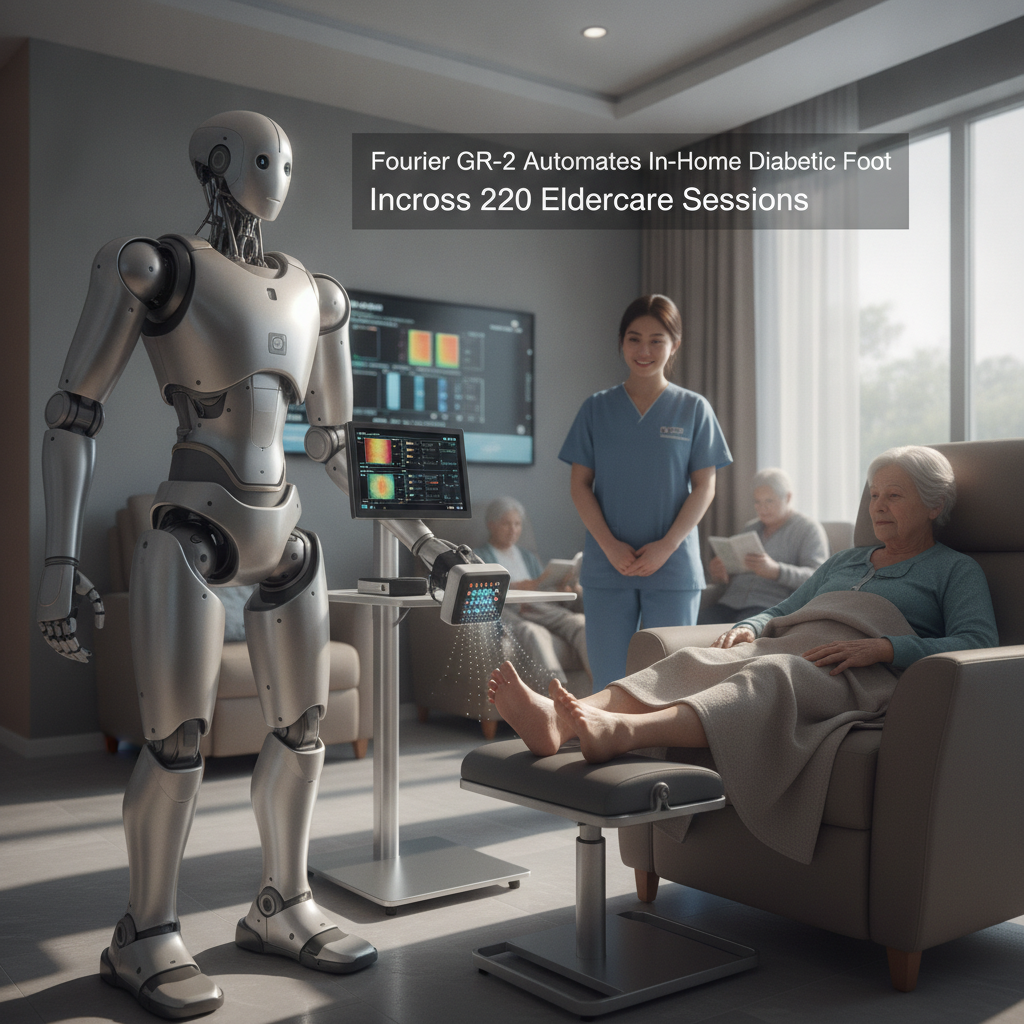
Routine medical monitoring is vital for seniors living independently, and the Fourier GR-2 is stepping up to provide critical in-home care. In a comprehensive trial spanning 220 senior visits, this advanced humanoid robot demonstrated precise diabetic foot ulcer inspections. By automating these essential visual medical checks, the GR-2 helps prevent serious tissue complications while allowing older adults to remain comfortably and safely in their own homes.
The Fourier GR-2 conducts these examinations using multi-spectral non-contact optical sensing. This technology allows the robot to scan the skin for early signs of tissue breakdown, inflammation, and reduced circulation without needing to apply pressure to sensitive areas. The optical sensors capture high-resolution data across various light spectrums, identifying microscopic colour changes that indicate early stage ulceration before it becomes a severe medical issue. This non-invasive approach is perfectly suited for vulnerable elderly patients who require frequent monitoring without unnecessary discomfort.
To achieve the correct scanning angles, the humanoid employs a gentle heel cradling technique. Its robotic hands are equipped with high-fidelity force sensors that ensure the patient's foot is lifted and supported with absolute care. The robot carefully rotates the ankle to expose the sole and heel to its optical suite, closely matching the dexterity of a trained human nurse. These 220 successful visits prove that Fourier Intelligence has developed a safe, effective, and deeply beneficial eldercare application for the GR-2.
Say hello to GR-2! | Fourier Intelligence
Embedded directly from Fourier to provide side-by-side manufacturer hardware verification alongside our task economics dispatch.
Diabetic foot ulcers can lead to severe infections and amputations if caught too late. Automated daily scanning ensures early detection and timely medical intervention for seniors.
Home healthcare agencies can deploy the Fourier GR-2 to perform daily optical screenings, keeping accurate clinical logs of patient skin health without dispatching a daily nurse.
At a 40-hour workweek (173.33 hrs/mo), running this 15-minute task on Fourier GR-2 costs $3.06 per task ($12.24/hr on Factory RaaS) or $1.72 per task ($6.87/hr on a 48-mo 7.9% APR loan).
The Fourier GR-2 humanoid robot performs in-home diabetic foot screenings using multi-spectral non-contact optical sensing. During 220 eldercare visits, the GR-2 employed gentle heel cradling to scan sensitive skin. The robot accurately identifies microscopic tissue inflammation and early stage ulceration without causing patient discomfort.
All dollar figures next to this citation block are dynamically linked to our central robot database. Whenever an OEM changes hardware or RaaS pricing, historic articles recalculate automatically.
Read our 40hr/wk & 7.9% APR FAQ →Diabetic Foot Inspection
Frequent home monitoring reduces the need for expensive and exhausting clinic visits.
Acquire or Finance the Robot Model(s) Featured in This Dispatch
- ✓Verified Status: Fourier Intelligence sells the GR-2 via direct B2B quote and institutional/research procurement
- ✓Fourier does NOT offer a public self-serve factory financial lease on fftai.com
- ✓Healthcare, rehabilitation, and university buyers typically finance GR-2 invoices via medical/commercial equipment lessors
- ✓Includes FSA 2.0 actuator support, dexterous hand SDK, and institutional onboarding
Q: Can home eldercare humanoid robots perform diabetic foot screenings and non-contact wound audits?
Yes. The Fourier GR-2 successfully completed 220 in-home visits performing diabetic foot screenings. It uses multi-spectral optical sensing to detect tissue breakdown while physically supporting the patient's foot with a gentle heel cradling technique.
Q: How do robots handle delicate human limbs safely?
Robots like the Fourier GR-2 use high-fidelity force sensors embedded in their hands. This allows them to precisely measure resistance and apply only the minimum required force to gently cradle and rotate a human ankle.
Get the Twice-Weekly Humanoid Intelligence Briefing
Every Tuesday and Friday morning: the 10 most-read stories, domestic chore field tests, tradie automation, and Robin Robot's audio podcast briefing.