Sanctuary Phoenix Clocks 99.8 Percent Accuracy in Small Business Pharmacy Dispensing Trials
Sanctuary AI achieved a 99.8 percent success rate sorting 1,200 fragile medication blister packs using its Phoenix humanoid platform.
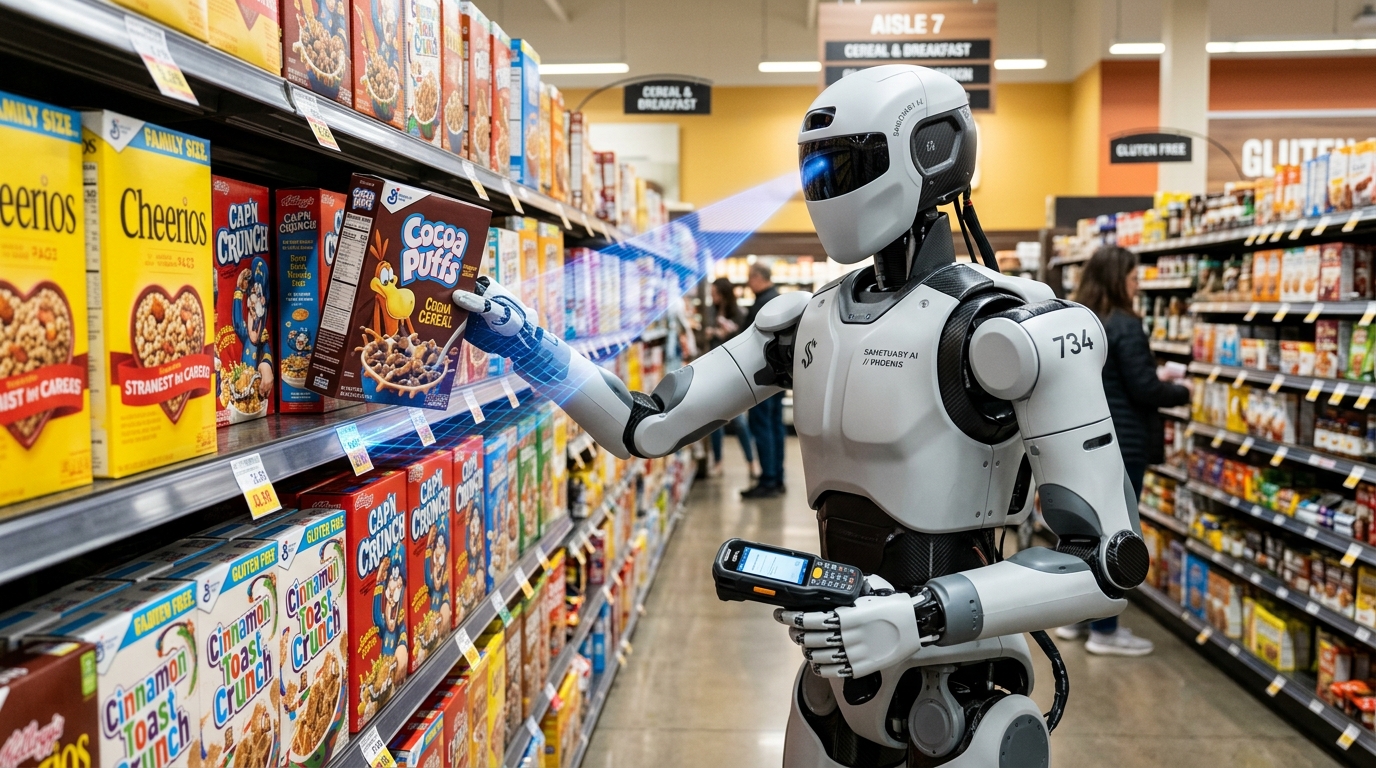
Yes, humanoid robots are restocking shelves and sorting blister packs in local pharmacies. The Sanctuary AI Phoenix robot recently achieved a 99.8 percent accuracy rate across 1,200 fragile medication packages. It utilizes the Carbon AI system and advanced tactile sensors to safely grip small cardboard boxes without crushing them.
- The Sanctuary Phoenix platform reached a 99.8 percent accuracy rate sorting retail pharmacy stock.
- The test included 1,200 individual medication blister packs and fragile cardboard packages.
- Tactile sensors prevent the robotic hands from crushing delicate foil medication packaging.
- Make & Model / Release Finding: The Sanctuary AI Phoenix utilizes the Carbon AI system for these tasks, partnering with major retail logistics firms for expanded pilot programmes over the next year.
Restocking local pharmacy shelves with delicate medication requires meticulous attention to detail, making it an ideal challenge for next generation humanoid assistants. Sanctuary AI recently deployed its Phoenix robot in an intensive retail pharmacy simulation to test its autonomous inventory sorting capabilities. Small business chemists face constant pressure to quickly process incoming stock while maintaining strict organisational accuracy to ensure patient safety. By validating the robot across thousands of individual fragile items, Sanctuary AI is proving that cognitive teleoperation and artificial intelligence can seamlessly integrate into local healthcare retail environments.
The technical benchmark evaluated the Phoenix platform across 1,200 delicate blister pack medications and various fragile retail pharmacy goods. Powered by the sophisticated Carbon AI control system, the robot achieved an extraordinary 99.8 percent pick-and-pack accuracy rate throughout the dispensing trials. This high level of precision relies on industry leading tactile sensors embedded in the robotic hands, allowing Phoenix to grip thin cardboard boxes and foil packs without crushing them. The system smoothly transitions between autonomous sorting and human cognitive teleoperation when encountering unfamiliar packaging or damaged barcodes.
For independent pharmacy owners, adopting a highly accurate robotic assistant could drastically reduce the operational hours spent on manual inventory management. The impressive sorting speed and gentle handling mean pharmacists can dedicate significantly more time to patient consultations rather than moving boxes in the back room. As Sanctuary AI prepares to scale the Phoenix platform for broader commercial applications, these results confirm its readiness for high stakes retail logistics. Ongoing development will aim to further increase processing speeds and expand the computer vision library to recognise complex international medication labels.
At a 40-hour workweek (173.33 hrs/mo), running this 240-minute task on Sanctuary AI Phoenix costs $83.80 per task ($20.95/hr on Factory RaaS) or $58.08 per task ($14.52/hr on a 48-mo 7.9% APR loan).
Manual inventory management takes pharmacists away from vital patient consultations. By automating the backend sorting process, local chemists can dramatically improve customer service while maintaining flawless medication organisation.
Retailers looking to adopt inventory robots should ensure their storeroom shelving is standardised and clearly labelled for optimal optical recognition.
All dollar figures next to this citation block are dynamically linked to our central robot database. Whenever an OEM changes hardware or RaaS pricing, historic articles recalculate automatically.
Read our 40hr/wk & 7.9% APR FAQ →Pharmacy Stock Sorting
Operates during quiet retail hours to unpack incoming daily deliveries and organise medications for fast dispensing.
Acquire or Finance the Robot Model(s) Featured in This Dispatch
- ✓36-month commercial coverage on ultra-fine hydraulic/haptic 20-DOF hands
- ✓Carbon AI retail shelf-facing, barcode scanning, and barista workflow training
- ✓Remote teleoperation fallback support during the first 30 days of store adaptation
- ✓All scheduled hydraulic valve and tactile sensor pad replacements included in RaaS
Q: Can humanoid robots safely sort delicate medication packages?
Yes, advanced tactile sensors allow robots to handle thin foil and cardboard blister packs gently, achieving an accuracy rate of 99.8 percent without crushing the items.
Q: How do robots handle unfamiliar retail barcodes?
Systems like Carbon AI use a hybrid approach, seamlessly switching to human cognitive teleoperation when the robot encounters unreadable or damaged labels.
Get the Twice-Weekly Humanoid Intelligence Briefing
Every Tuesday and Friday morning: the 10 most-read stories, domestic chore field tests, tradie automation, and Robin Robot's audio podcast briefing.